National Cybersecurity Awareness Month

Discover  |  Test  |  Control

Articles, guides, and tips discovering risk, testing your defenses, and controlling the exposure in the healthcare industry. 

October is the perfect time to see where your organization stands. As Healthcare’s Cybersecurity Partner®, Fortified helps you protect your organization and patient data without distracting you from your mission.

Join Us Live

this Cybersecurity Awareness Month

Throughout October, we’re bringing healthcare organizations direct access to our threat intelligence and security expertise.

This event has passed and is available on-demand. 

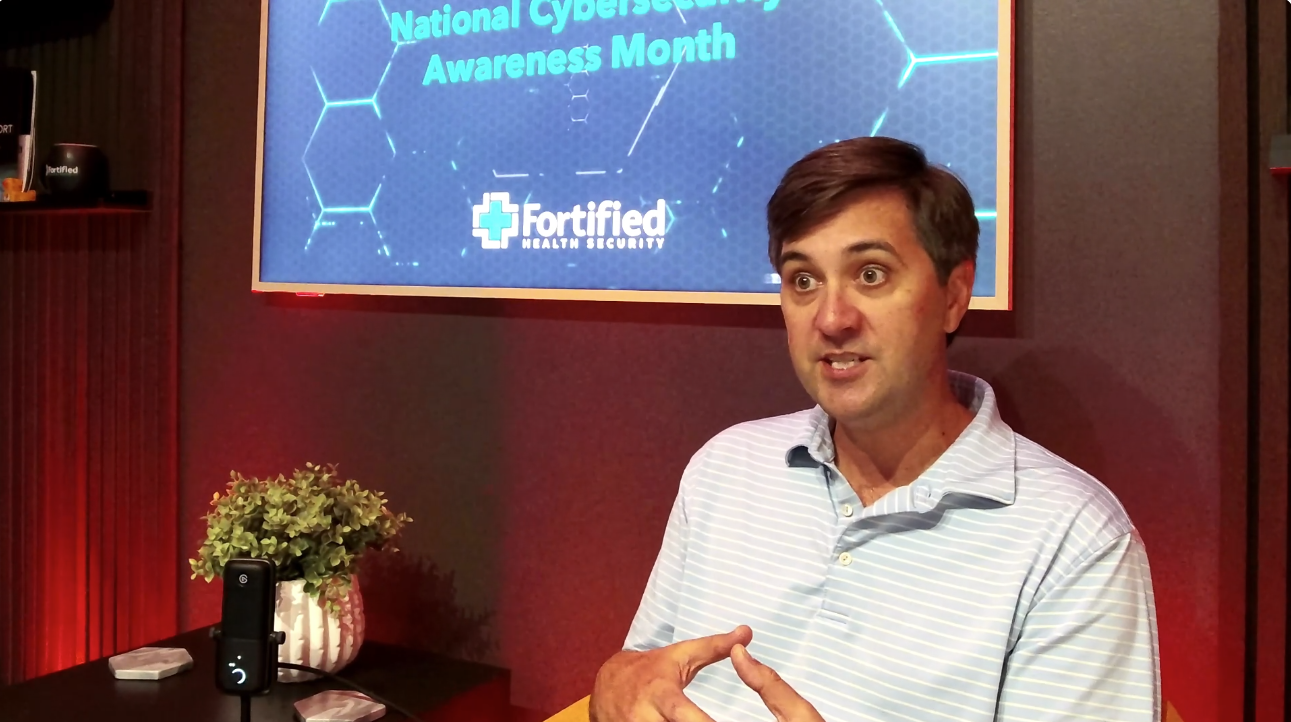
Join Russell Teague and guest speaker Mark Ferrari for a live, interactive briefing. Held quarterly, each session provides healthcare cybersecurity leaders with an opportunity to engage on current issues shaping healthcare, hear how their peers are addressing challenges, and leave with a sharper focus for their own teams.

The most unsettling moment in a scary movie is not when the monster appears. It’s when you realize it has been there the whole time.

In this campfire-side chat, Russell Teague and Dr. Murali Naidu will explore what happens when AI moves from innovation to infrastructure

Catch Up Anytime

With on-demand webinars

Make this Awareness Month Count

Get Your 30-Minute Security Pulse Check

Turn good intentions into a real benchmark with Fortified Health Security’s Cyber Pulse Check.

Through 14 quick questions we’ll uncover a high-level view of where your program stands backed by a shareable, impactful visual scorecard (green, yellow, red) you can bring straight to your teams or your leadership.

The Cyber Pulse Check is available only to healthcare organizations, including providers, healthcare technology, and payers. 

Thoughts from Our Healthcare Cybersecurity Experts

prepared exclusively for Cybersecurity Awareness Month

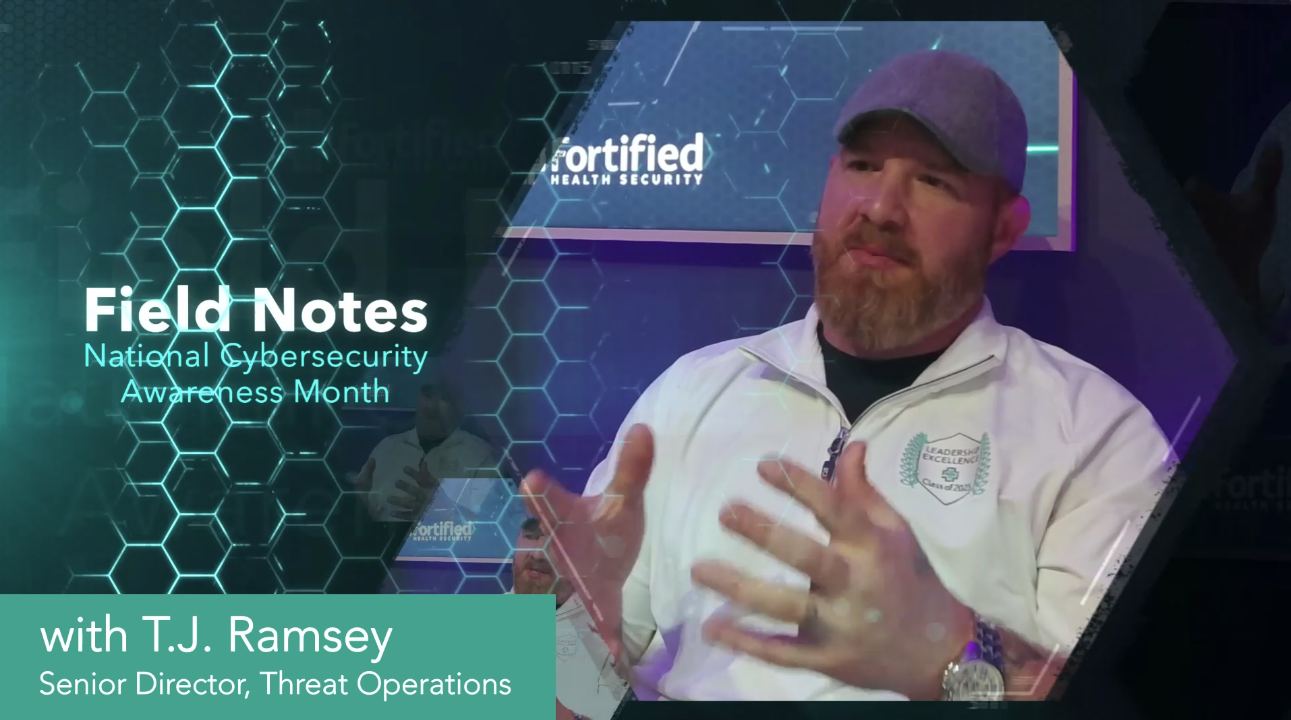
Field Notes

from some of our team on the frontlines

Featured Articles

09/30/2026

By: Jim Kirk

Walk a hospital floor and you’ll see the same tension: new EHR terminals sitting a few feet from an infusion ...

09/30/2026

By: Troy Cruzen

Every October, organizations observe Cybersecurity Awareness Month. Employees are reminded not to click suspicious links, use strong passwords, and complete ...

09/30/2026

By: T.J. Ramsey

During Cybersecurity Awareness Month, most conversations focus around a security program’s visible layers, such as firewalls, endpoint detection, cybersecurity awareness ...

09/30/2026

By: Jason Stewart

Privacy and security are related but not the same thing. Security primarily focuses on external actors gaining unauthorized access to ...

09/30/2026

By: Jason Stewart

When US Airways Flight 1549 took off from New York’s LaGuardia airport on January 15, 2009, neither the flight crew ...

09/30/2026

By: Jason Stewart

According to the 2026 Data Breach Investigations Report, the Healthcare industry experiences the sixth highest number of security incidents in ...

09/30/2026

By: Tamra Durfee

A real-time look at how a fake executive recruiter used personalization, patience, and pressure to build a believable phishing campaign. ...

Useful Healthcare Cybersecurity Guides

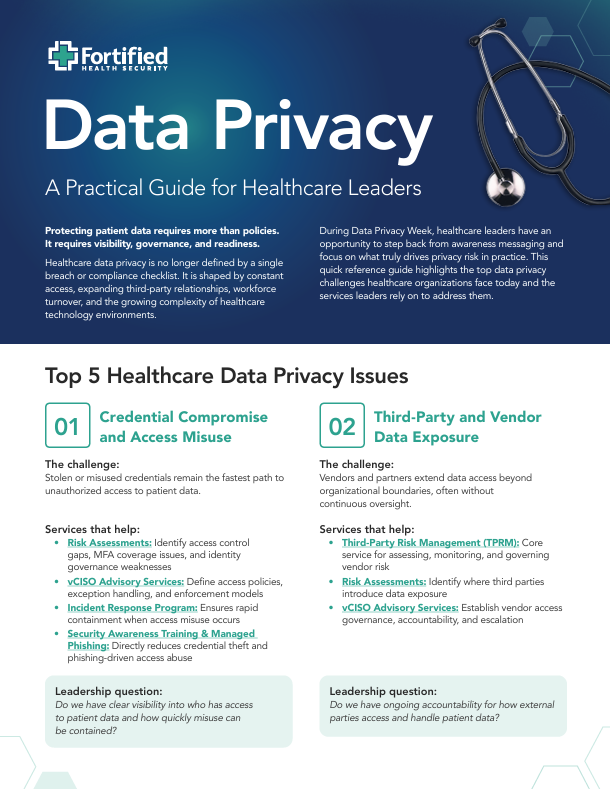
Action-oriented, no-fluff guides for healthcare cybersecurity professionals and their leaders. 

Healthcare AI in the Wild

What's Real, Risky and Next

AI is running wild in healthcare, appearing in vendor tools, electronic health record (EHR) systems, and nearly everywhere else. Some uses are visible, while others go unchecked in the shadows. Either way, healthcare IT and security teams are being asked to manage the risk.

Senior vCISO Raj Patel and VP, Enterprise Risk Management and CSO Bob Swaskoski discuss what’s real, risky, and next. 

We meet you where you are.

Let’s discuss your cybersecurity journey.

With our nationwide presence and end-to-end portfolio of healthcare cybersecurity solutions, we meet you where you are in your cybersecurity journey, and take you where you want to go.

Cybersecurity Awareness Month FAQs

What is Cybersecurity Awareness Month?

Cybersecurity Awareness Month was launched by the National Cyber Security Alliance (NCSA) and the U.S. Department of Homeland Security (DHS) in 2004 as an effort to help Americans stay safer and more secure online.

Why is Cybersecurity Awareness Month important for healthcare organizations?

Cybersecurity Awareness Month is an important opportunity for healthcare organizations to reinforce security awareness and help employees recognize and respond to cyber threats. Healthcare organizations are especially attractive targets because they handle sensitive patient information and rely on technology to deliver care. Raising awareness around threats like phishing, ransomware, and social engineering can help reduce human-related risk and strengthen an organization’s overall cybersecurity posture.

What are the biggest cybersecurity risks facing healthcare organizations?

The biggest cybersecurity risks facing healthcare organizations include ransomware, phishing and social engineering, compromised credentials, vulnerabilities in medical devices and connected systems, and third-party or supply chain risks. These threats can disrupt patient care, expose sensitive health information, and create significant financial and operational consequences. Healthcare organizations can reduce risk by combining employee awareness with strong security controls, continuous monitoring, regular risk assessments, and a well-defined incident response plan.

What can healthcare organizations do to improve cybersecurity?

Secure medical devices — many run outdated, unpatchable software, so segment them on the network and monitor continuously.

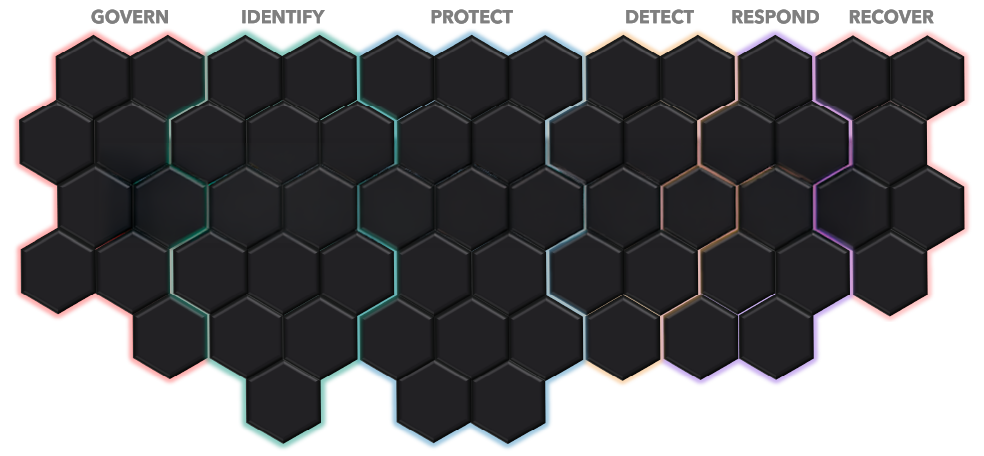
Strengthen access controls — multi-factor authentication and least-privilege access reduce credential-based breaches.

Manage vendor risk — third parties are a leading cause of healthcare breaches; vet and monitor their access.

Train staff — phishing remains a top attack vector; ongoing awareness training cuts human-error risk.

Have an incident response plan — one built for clinical continuity, not just data recovery.

Run regular risk assessments — required under HIPAA and useful for catching gaps early.


What are the most important cybersecurity practices for healthcare organizations?

Multi-factor authentication (MFA) — the single biggest defense against credential theft, still a top breach cause in healthcare.

Network segmentation — isolates medical devices and legacy systems that can’t be patched.

Regular risk assessments — required by HIPAA and essential for finding gaps before attackers do.

Vendor/third-party risk management — business associates are a frequent breach source.

Security awareness training — phishing is still the most common entry point.

Tested incident response plans — built around maintaining patient care, not just IT recovery.

Continuous monitoring and threat detection — catches intrusions early, given how attractive patient data is to attackers.

How can healthcare organizations identify and prioritize cybersecurity risks?

Healthcare organizations can identify and prioritize cybersecurity risks through a structured process:

Conduct a risk assessment — required under HIPAA; inventory all systems, medical devices, and data flows to find vulnerabilities.

Classify assets by criticality — rank systems by their impact on patient safety and care continuity, not just data sensitivity.

Assess third-party/vendor exposure — many risks originate outside the organization’s direct control.

Use threat intelligence — track attack trends specific to healthcare (e.g., ransomware targeting hospitals) to focus resources where risk is highest.

Score and rank findings — combine likelihood and potential clinical/operational impact to prioritize remediation.

Reassess regularly — risk isn’t static; new devices, vendors, and threats require ongoing review, not a one-time audit.